Database Migrations Without Downtime
PROGRAMMING
Why Schema Changes Are Dangerous
Schema changes are among the most risky operations in production systems.
Every developer has a story:
A table that locked
A deployment that timed out
A rollback that failed
A 3 AM emergency call
These are not accidents.
They are the result of treating migrations as one-step operations instead of disciplined, multi-step processes.
The Core Principle
Zero-downtime migrations are not magic.
They are a result of discipline and repeatable patterns.
Rule 1: Always Be Backward-Compatible
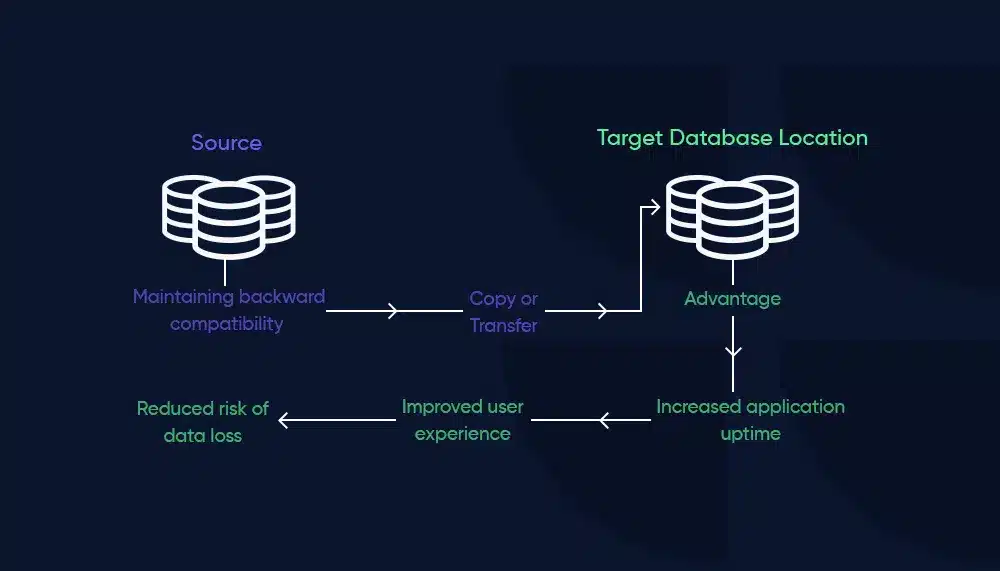
Any deployment introducing a schema change must work with:
Old code
New code
A common mistake:
Renaming a column directly ❌
Correct approach:
Add a new column
Write to both (dual-write)
Migrate data
Remove the old column later
Rule 2: Expand → Migrate → Contract
This is the fundamental pattern for safe migrations:
1. Expand
Add the new schema alongside the old.
2. Migrate
Move data gradually
Update the application to support both versions
3. Contract
Remove the old schema once fully transitioned.
Each phase:
Is a separate deployment
Is reversible
This pattern turns risky changes into controlled transitions.
Rule 3: Move Heavy Work to Background Jobs
Long-running operations should never block production.
Example problem:
Adding a column with a default value to a large table → locks the table
Correct approach:
Add column without default (instant)
Backfill data in batches (background jobs)
Add constraints after data is ready
Slow and controlled always beats fast and broken.
Rule 4: Use Feature Flags as Safety Nets
Wrap new schema usage in feature flags.
Benefits:
Instantly disable new behavior if something breaks
No need for risky database rollbacks
System safely falls back to old logic
Feature flags separate deployment from release.
Rule 5: Test on Production-Like Data
Small test datasets lie.
10K rows → runs in seconds
10M rows → may take hours
Always test migrations on:
A copy of production data
Realistic scale
This step alone prevents most surprises.
Final Insight
Zero-downtime migrations are not about clever tricks.
They are about:
Predictability
Process
Discipline
Once your team adopts Expand → Migrate → Contract,
those 3 AM incidents disappear.
Read also
Explore our services, browse the blog, or contact Tarawud.
About Tarawud
Tarawud is a Saudi digital agency helping businesses grow through web, apps and digital marketing aligned with Vision 2030.