
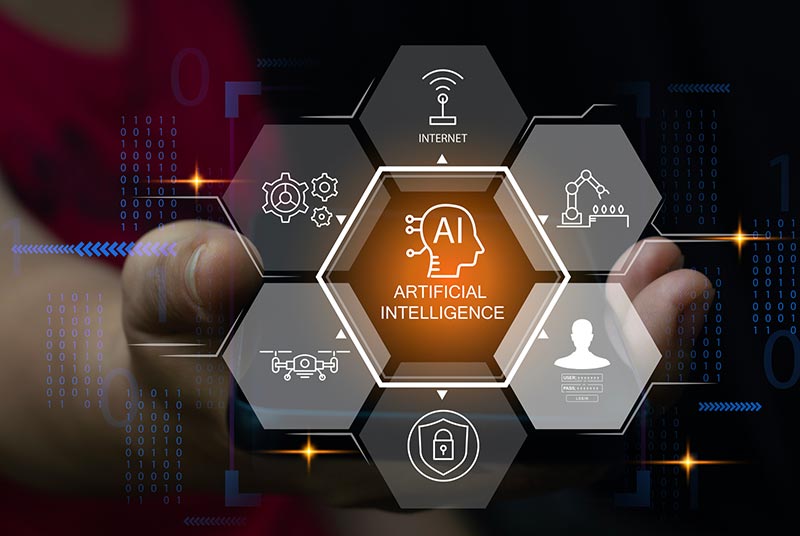
The Future of AI-Powered Digital Products and Smart Platforms
Introduction
Artificial Intelligence is rapidly transforming the digital economy, reshaping how businesses build products, automate operations, and interact with users. In 2026, AI-powered digital products are no longer futuristic — they are the foundation of modern software ecosystems.
From SaaS platforms to enterprise systems, AI is driving a new era of intelligent, scalable, and personalized digital experiences.
What Are AI-Powered Digital Products?
AI-powered digital products are software systems that use Artificial Intelligence technologies to learn, adapt, and improve continuously.
Core AI technologies include:
- Machine Learning (ML)
- Large Language Models (LLMs)
- Predictive Analytics
- Computer Vision
- Natural Language Processing (NLP)
- Autonomous AI Agents
Unlike traditional software, these systems evolve based on user behavior and data.
Examples of AI-powered products:
- AI SaaS platforms
- Intelligent CRMs
- E-commerce recommendation systems
- Smart healthcare applications
- AI customer support agents
- Marketing automation platforms
🔗 Related service:
https://tarawud.com/services/ai-automation
Why AI Platforms Are Growing Rapidly
AI adoption is accelerating because businesses need smarter, faster, and more scalable systems.
Key benefits include:
- Automating repetitive tasks
- Reducing operational costs
- Improving customer experience
- Delivering real-time insights
- Scaling business operations efficiently
- Enabling hyper-personalization
Traditional systems rely on static workflows, while AI systems continuously adapt and improve.
Key Technologies Behind Smart Platforms in 2026
1. Large Language Models (LLMs)
LLMs act as the intelligence layer of modern applications.
They enable:
- Natural language understanding
- Content generation
- Automated communication
- Data summarization
- Decision support
Common use cases:
- AI chatbots
- Coding assistants
- Business copilots
- Customer support systems
📌 External reference:
https://developers.google.com/machine-learning
2. AI Agents and Autonomous Systems
AI agents are one of the biggest shifts in 2026 software architecture.
They can:
- Make independent decisions
- Execute workflows automatically
- Interact with APIs
- Learn from outcomes
Use cases:
- Sales automation
- Marketing execution
- Data analysis
- Inventory optimization
- Internal operations
These systems are turning software into self-operating platforms.
3. Predictive Analytics
AI systems can predict future outcomes based on historical data.
Applications include:
- Customer behavior prediction
- Fraud detection
- Demand forecasting
- Risk analysis
- Personalized recommendations
4. Real-Time Personalization
AI enables dynamic user experiences based on behavior and preferences.
Data analyzed includes:
- User behavior
- Purchase history
- Search patterns
- Engagement metrics
Examples:
- Personalized product recommendations
- AI-generated content feeds
- Smart email campaigns
- Adaptive learning systems
Industries Being Transformed by AI Platforms
E-Commerce
AI improves:
- Product recommendations
- Dynamic pricing
- Inventory forecasting
- Customer support
🔗 Portfolio example:
https://tarawud.com/works
Healthcare
AI systems support:
- Disease detection
- Medical imaging analysis
- Patient monitoring
- Risk prediction
Finance & Fintech
AI is used for:
- Fraud detection
- Investment analysis
- Financial forecasting
- Risk management
Education Technology
AI-powered platforms enable:
- Personalized learning paths
- Automated quizzes
- AI tutoring systems
- Performance tracking
Generative AI in Digital Products
Generative AI is now a core part of modern platforms.
It is used for:
- Marketing content creation
- Website copywriting
- Code generation
- Images and videos
- Business reports
This reduces production time and increases scalability significantly.
Challenges of AI-Powered Platforms
1. Data Privacy & Security
AI systems rely heavily on data, raising concerns about:
- Privacy
- Security
- Compliance
- Ethical usage
2. AI Accuracy
Challenges include:
- Incorrect predictions
- Bias in models
- Hallucinated outputs
Human oversight is still essential.
3. Infrastructure Costs
AI systems require:
- GPUs
- Cloud infrastructure
- Large-scale data pipelines
Although costs are decreasing, they remain significant.
Future of AI Platforms Beyond 2026
The future is moving toward fully autonomous systems.
We will likely see:
- Self-operating business platforms
- Emotion-aware AI interfaces
- AI-native operating systems
- Self-improving applications
- Hyper-personalized ecosystems
AI will shift from being a feature inside software to becoming the software itself.
Images (SEO Boost)
Hero Image
AI-powered digital ecosystem concept
Alt text: AI-driven smart platform connecting digital services and automation systems
In-body Image 1
AI automation workflow diagram
Alt text: AI agents automating business workflows in real time
In-body Image 2
Human interacting with AI dashboard
Alt text: User interacting with intelligent AI-powered business dashboard
Final Thoughts
AI-powered digital products are reshaping the future of technology in 2026. Businesses that adopt AI-native systems early will gain a major advantage through:
- Faster innovation
- Lower operational costs
- Smarter automation
- Better user experiences
- Scalable digital systems
🔗 Related reading:
https://tarawud.com/services/ai-automation
Read also
Explore our services, browse the blog, or contact Tarawud.
About Tarawud
Tarawud is a Saudi digital agency helping businesses grow through web, apps and digital marketing aligned with Vision 2030.